

Industrial IoT (IIoT): A Close Look
Industrial IoT (IIoT): A Close Look
Boardesign, 02/05/2025
Definition and Origins
The Internet of Things (IoT) has roots going back to 1999, when Kevin Ashton, then executive director of MIT’s Auto-ID Labs, introduced this revolutionary concept. During a presentation for Procter & Gamble, Ashton pointed out a fundamental limitation of the Internet: its dependence on human input for data collection. Whether it was typing information, pressing buttons, or scanning barcodes, human intervention represented a significant bottleneck.
Ashton imagined a future in which computers could “perceive” the physical world autonomously, gathering data without human mediation. This vision promised to reduce waste and operating costs by providing real-time information on when assets needed repair or replacement.
From this core idea grew the Industrial Internet of Things (IIoT), which applies IoT principles specifically to industrial environments to improve the efficiency, productivity, and safety of operations. This concept is intrinsically tied to Industry 4.0, or the Fourth Industrial Revolution, which represents the digital transformation of the manufacturing sector through the integration of technologies like IoT, artificial intelligence, and advanced data analytics.
Layered Architecture
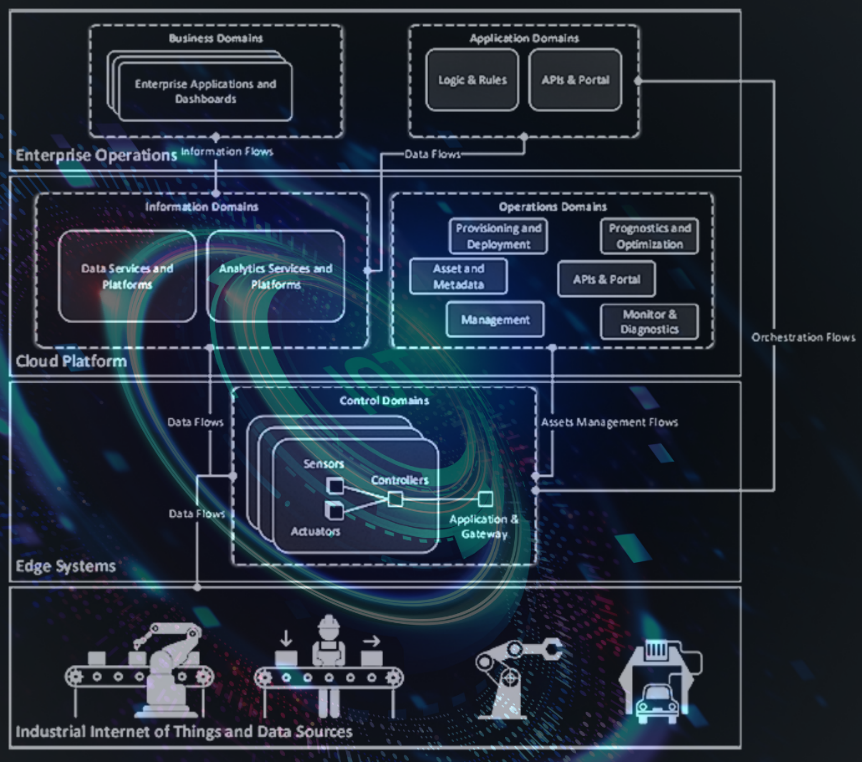
While there’s no universally standardized architecture for IIoT, most implementations follow a multi-layer model that facilitates the collection, transport, processing, and analysis of industrial data.
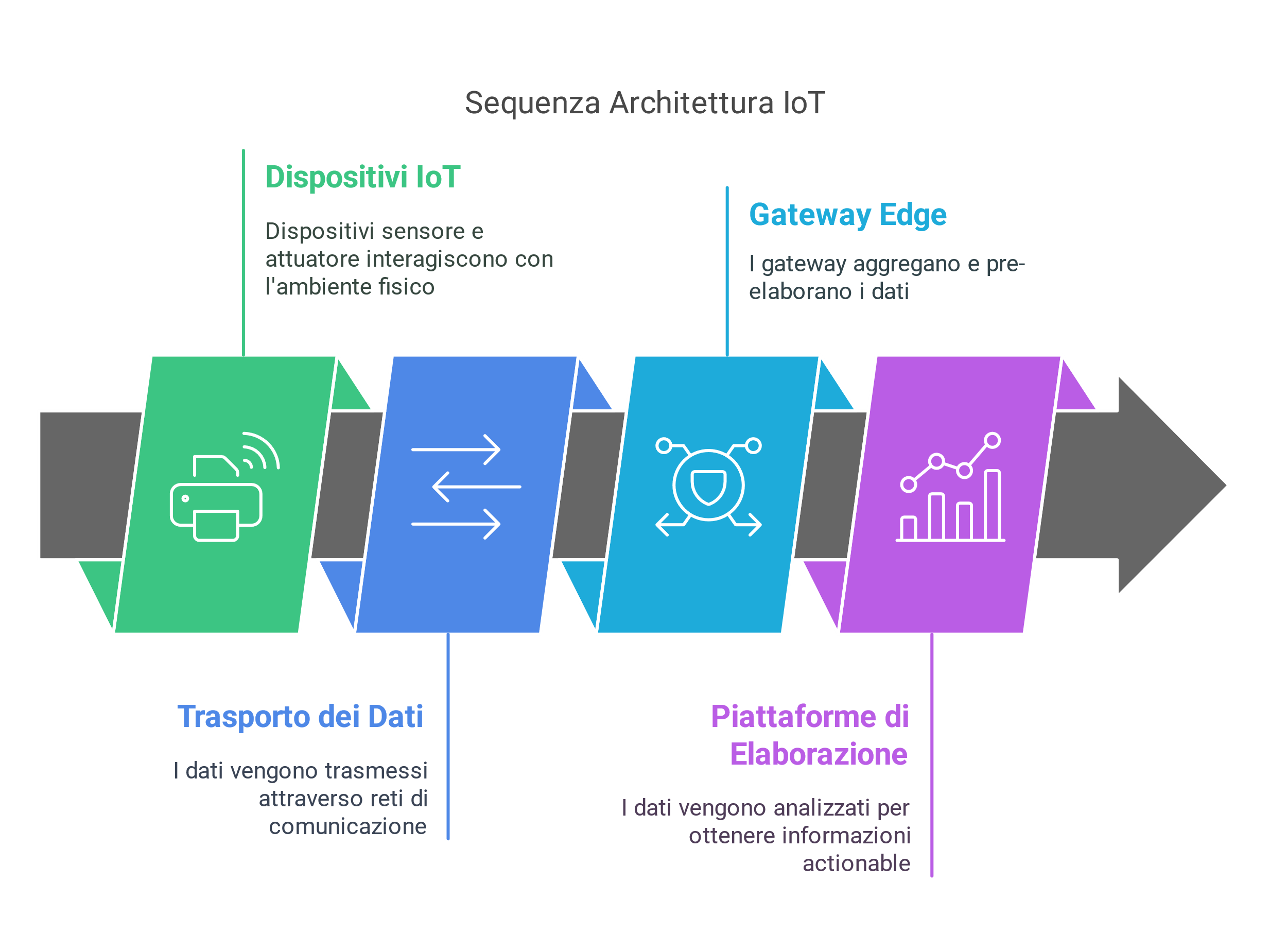
At the lowest level we find the IoT devices — sensors, actuators, and smart machinery that interact directly with the physical environment. These devices gather vital information on operating conditions, equipment performance, and other critical parameters.
The data collected is then transported through various communication networks, which can be local or geographically distributed, wired or wireless, depending on the specific needs of the application and operating environment.
Often, an intermediate layer of edge gateways plays a crucial role in aggregating and pre-processing data before sending it to higher-level systems. These gateways not only optimize data flow — reducing load on the network and the cloud — they also provide essential security and connectivity features.
At the top layer of the architecture we find the processing and analytics platforms, which can be deployed in the cloud or on-premise. Here data is stored, analyzed in depth, and transformed into actionable information that drives operational decisions, optimizes processes, and enables new business models.
Sensors and Actuators: The Heart of Data Collection and Control
IIoT systems are built on the ability to sense and interact with the physical world — a task entrusted to increasingly sophisticated sensors and actuators. The evolution of connectivity technologies, which are now accessible and economically viable, has significantly expanded the possible applications of sensor data.
Types of Sensors
The diversity of sensors used in IIoT reflects the variety of physical parameters that need monitoring in industrial environments. Among the most common are:

- Temperature sensors that continuously monitor the heat generated by machinery or processes, essential for preventing overheating and ensuring optimal operating conditions.
- Pressure sensors that keep watch on hydraulic, pneumatic, or process systems, flagging potential problems before they turn into critical failures.
- Vibration sensors that detect subtle changes in the vibrations of rotating machinery, enabling early identification of wear or misalignment.
- Level sensors that accurately measure the quantity of liquids or solids in tanks, optimizing inventory management and production processes.
- Humidity sensors that monitor environmental conditions, fundamental in processes sensitive to humidity variations.
- Position sensors that track the location of mobile assets or the movement of components within machinery.
- Proximity and presence sensors that detect nearby objects or people, improving safety and process automation.
- Vision sensors that give “observation” capabilities to automated systems, enabling quality inspections, object recognition, and visual monitoring.
- Flow sensors that accurately measure the flow rate of liquids or gases, ensuring efficient and safe processes.
- Gas sensors that monitor the presence and concentration of potentially hazardous substances, protecting both the environment and worker health.
- RFID and Tags that enable automatic identification and tracking of assets, facilitating inventory management and logistics.
Wireless Sensor Networks (WSN)
WSNs represent a significant evolution in the IIoT landscape, offering networks of autonomous sensors with low-power data acquisition and wireless communication capabilities. These systems are designed to operate in contexts where continuous electrical power isn’t available or practical, greatly extending the reach of industrial sensing.
Low-power wireless sensors pose specific challenges, particularly in terms of data security and protection. In many areas, such as posture recognition, different technologies are in use — from piezoelectric and piezoresistive sensors to reflective infrared sensors, to textile pressure sensors — each with features suited to specific application contexts.
Actuators
The counterpart to sensors, actuators represent the “active” side of IIoT, acting on physical reality in response to analyzed data or received commands. These devices — which can be valves, motors, switches, or more complex mechanisms — modify the state of industrial systems, closing the feedback loop.
The synergy between sensors and actuators enables the creation of closed-loop control systems, where the actions of actuators influence the parameters monitored by sensors, generating a continuous optimization process. This constant interaction between monitoring and intervention represents one of the major advantages of IIoT over traditional industrial automation systems.
Digital Connectivity and Protocols: The Connective Tissue of IIoT
Connectivity is the unifying element of the IIoT ecosystem — the fabric that links field devices to the processing and analytics systems. The choice of network technology depends on many factors, including the distance to cover, the amount of data to transmit, latency requirements, and environmental conditions.
Types of Networks
Several different network technologies are used in IIoT, each with its own distinctive characteristics:
- Local Area Networks (LANs), based on Ethernet or Wi-Fi, provide high-speed connections within limited areas like production plants or warehouses. These networks offer high bandwidth and low latency, ideal for applications that require fast communication and transmission of large volumes of data.
- Low-Power Wide-Area Networks (LPWAN) like LoRaWAN, NB-IoT, and Sigfox are optimized for battery-powered devices that need to transmit small amounts of data over long distances. These technologies prioritize energy efficiency and wide coverage over transmission speed.
- Cellular Networks (4G/LTE, 5G) offer a balance of speed, coverage, and mobility, making them particularly well suited for applications that require reliable communication over wide geographical areas or for assets on the move.
- Bluetooth and Zigbee enable short-range wireless communication between nearby devices, with low power consumption that makes them ideal for sensor networks and local control systems.
- Industrial Networks specialized for the purpose, based on protocols like Modbus, Profibus, and the more recent OPC UA, have been designed specifically for industrial automation, offering determinism, robustness, and compatibility with existing control systems.
Communication Protocols
The diversity of IIoT devices and applications has led to the adoption of multiple communication protocols, each optimized for specific use cases:
- MQTT (Message Queuing Telemetry Transport) has become a de facto standard for IoT thanks to its lightweight footprint and publish/subscribe model, which make it ideal for asynchronous communication in unreliable networks or with resource-constrained devices.
- CoAP (Constrained Application Protocol) offers a lighter alternative to traditional HTTP, keeping a request/response model familiar to web developers but optimized for devices with limited resources.
- AMQP (Advanced Message Queuing Protocol) provides advanced enterprise-grade messaging features, guaranteeing delivery reliability and sophisticated routing mechanisms.
- HTTP/HTTPS, the fundamental protocols of the web, are frequently used to communicate with cloud services and web applications, benefiting from wide compatibility and solid security implementations.
- Sensor-specific data transport protocols govern direct communication with sensors and often require protocol conversion for integration with TCP/IP infrastructures.
- WSN protocols have been developed specifically for wireless sensor networks, with particular focus on energy efficiency and dynamic topology management.
The security of communications remains a critical aspect of IIoT, requiring the implementation of solid encryption and authentication techniques to protect data in transit. In parallel, data compression helps optimize the use of available bandwidth.
Interoperability between devices and systems from different vendors remains a persistent challenge, requiring shared standards, collaborative processes, and flexible middleware solutions to ensure effective integration within the IIoT ecosystem.
Data Management and Analysis: Turning the Data Deluge into Actionable Insight
The real power of IIoT lies in the ability to transform the enormous volume of raw data generated by connected devices into valuable information that drives operational and strategic decisions. This transformation requires robust infrastructure and advanced analytical techniques.
Cloud-based Data Collection Systems and Services
Cloud computing has revolutionized IIoT data management, offering scalable, flexible, and accessible infrastructure for the storage, processing, and analysis of ever-growing data volumes.
Structures
The typical architecture of a cloud system for IIoT comprises several integrated components:
- Data Ingestion services handle the acquisition and ingestion of heterogeneous data streams coming from thousands or millions of devices, gateways, and edge systems. These services have to process data in various formats — structured, semi-structured, and unstructured — and handle both batch transmissions and real-time streaming.
- Data Storage solutions provide the foundation for the persistent storage of IIoT data. Data lakes offer flexible repositories for raw data in any format, while data warehouses organize processed data into structures optimized for analysis and reporting. The choice of database platforms needs to consider the specific characteristics of IIoT data, such as the time-series nature of many sensor measurements.
- Data Processing and Analytics services transform raw data into valuable information. This process starts with fundamental operations of cleaning, transforming, and aggregating data, before applying more sophisticated techniques of big data analytics, machine learning, and artificial intelligence. These advanced technologies make it possible to identify complex patterns, detect anomalies that might indicate imminent problems, and predict future events with growing accuracy.
- Data Visualization tools make complex information understandable through intuitive visual representations. Interactive dashboards allow decision-makers to monitor operational performance in real time, identify emerging trends, and drill into specific areas of interest.
- Security and Governance systems ensure that sensitive data is properly protected through encryption techniques and granular access controls. At the same time, these systems ensure compliance with privacy regulations and transparency in data collection and usage practices.
Leading Players in the Sector
The market for IIoT cloud platforms is dominated by large technology players, each with distinctive offerings:
- Amazon Web Services (AWS) IoT Core offers a complete ecosystem of services for connecting, managing, and analyzing IoT devices at global scale, integrating seamlessly with the broader AWS cloud service portfolio.
- Microsoft Azure IoT Hub provides a centralized platform for device management and data ingestion, with strong integration capabilities for existing enterprise environments based on Microsoft technologies.
- Google Cloud IoT Platform leverages Google’s advanced big data and machine learning capabilities to offer highly scalable IoT solutions with powerful analytical features.
- IBM Watson IoT Platform combines device management features with Watson’s cognitive capabilities, making it easier to apply artificial intelligence to IoT data.
Beyond these market leaders, there are numerous specialized platforms focused on specific industrial sectors or vertical functionality, enriching the ecosystem of available solutions.
Real-time analysis of IIoT data is taking on growing importance in scenarios where the timeliness of decisions is critical. To support these needs, edge computing allows data to be processed closer to its source, reducing latency, bandwidth consumption, and the cost of communicating with the cloud.
Finally, middleware technologies play a fundamental role in orchestrating communication between the different components of the IIoT architecture, facilitating the reliable transfer of large data volumes and offering intermediate processing and storage capabilities.
Embedded Systems and Industrial Automation
IIoT systems don’t operate in isolation — they integrate deeply with existing industrial infrastructure, particularly with the embedded systems that control machinery and devices. This integration represents a natural evolution of traditional industrial automation, adding layers of connectivity and distributed intelligence that open up new possibilities.
Established automation systems like PLCs (Programmable Logic Controllers) and SCADA (Supervisory Control and Data Acquisition) are being enriched with advanced communication capabilities, allowing them to actively participate in the IIoT ecosystem. This evolution enables the creation of production systems that are more flexible, adaptable, and capable of self-optimization.
Fog computing represents a conceptual extension of this integration, bringing cloud processing capabilities closer to operational environments and creating a computational continuum from the field device all the way up to centralized data centers.
Artificial Intelligence and Machine Learning
Artificial Intelligence (AI) and Machine Learning (ML) are emerging as transformative technologies that significantly amplify the value of industrial data. AI isn’t limited to data analysis — it orchestrates the entire information management process, from high-speed ingestion to the extraction of actionable knowledge.
Advanced ML algorithms have the ability to identify complex patterns hidden in data that would escape traditional analysis. This capability is particularly valuable for detecting subtle anomalies that might indicate imminent problems in machinery or processes. AI-based systems can act as “digital sentinels,” constantly monitoring data streams and flagging deviations from expected behavior.
The real power of AI in IIoT shows up in its predictive capability: by analyzing historical data and current operating conditions, machine learning models can anticipate future events, making it possible to transition from reactive or preventive maintenance strategies to more efficient predictive and prescriptive ones.
Advanced techniques like artificial neural networks (ANNs) and deep learning (DL) are proving particularly effective at processing the complex, multi-modal data typical of industrial environments. In parallel, dimensionality reduction methods help manage the enormous data volume, extracting the most relevant features and improving analytical efficiency.
An area of growing interest is the application of AI in edge computing, which brings advanced analytical capabilities directly to field devices, enabling autonomous real-time decisions without depending on cloud connectivity.
Challenges and Justifications
While adoption of IIoT promises significant benefits, it also brings a number of challenges that need to be faced strategically. Cybersecurity emerges as a primary concern, since growing connectivity exposes industrial systems to potential vulnerabilities. The lack of established standards for IoT security further complicates the picture.
The privacy of collected data raises ethical and legal questions, particularly when information can be traced back to individuals. Interoperability between heterogeneous systems represents another significant challenge, requiring the adoption of open standards and flexible architectures.
Managing the large volumes of data generated by IIoT devices requires scalable infrastructure and effective strategies to filter the relevant information from background “noise.” This goes hand in hand with the need to develop specialized skills that cross traditional boundaries between computing, electronics, and specific application domains.
Finally, implementation costs can be a significant barrier, particularly for small and medium-sized enterprises. However, a thorough return-on-investment analysis often justifies this initial spend.
The economic case for adopting IIoT is built on multiple benefits: increased operational efficiency through process optimization, reduced maintenance costs thanks to the ability to anticipate and prevent failures, improved product quality through tighter controls, and greater flexibility and agility that allow the business to respond quickly to market changes.
Beyond operational improvements, IIoT opens the door to new business models, letting companies evolve from simple product suppliers into providers of data-driven, value-added services.
Enabling Technologies
The IIoT ecosystem rests on a set of enabling technologies that, combined, create an integrated environment for industrial digital transformation:
- Advanced sensors and intelligent actuators represent the “senses” and “limbs” of IIoT, enabling interaction with the physical world.
- Broadband and low-power communication networks, such as 5G and LPWAN technologies, provide the connectivity infrastructure needed to transport data efficiently and reliably.
- Cloud computing and IoT platforms offer the scalable infrastructure for processing, storing, and analyzing the data collected.
- Edge computing and fog computing extend computational capabilities closer to data sources, enabling real-time processing and reducing dependence on constant connectivity.
- Artificial intelligence and machine learning turn raw data into actionable insights, identifying patterns, anomalies, and optimization opportunities.
- Big data analytics provides the tools to manage and extract value from growing volumes of industrial data.
- Cyber-Physical Systems (CPS) create a bridge between the physical and digital worlds, integrating physical components with computational capabilities.
- Automatic identification and tracking technologies like RFID and QR codes facilitate asset management and supply-chain visibility.
- Digital Twins offer virtual representations of physical assets and processes, allowing simulation, predictive analysis, and optimization without operational risk.
Cyber-Physical Systems (CPS)
Cyber-Physical Systems (CPS) represent the synergistic integration between physical and computational components, creating systems in which the real world and the digital world merge into a coherent whole. In IIoT, this integration shows up when machinery, sensors, and actuators (physical components) are deeply interconnected with IT systems, software, and networks (cyber components).
What distinguishes CPS is their ability to create continuous feedback loops: they monitor the physical environment through sensors, process the collected data to extract meaning, make decisions based on that analysis, and act on the physical world through actuators. This process often happens in real time and with growing levels of decision-making autonomy.
IIoT can be interpreted as a specific industrial application of the broader CPS paradigm, focused on optimizing production processes, predictive maintenance, performance monitoring, and other industrial applications.
An Overview of Application Cases
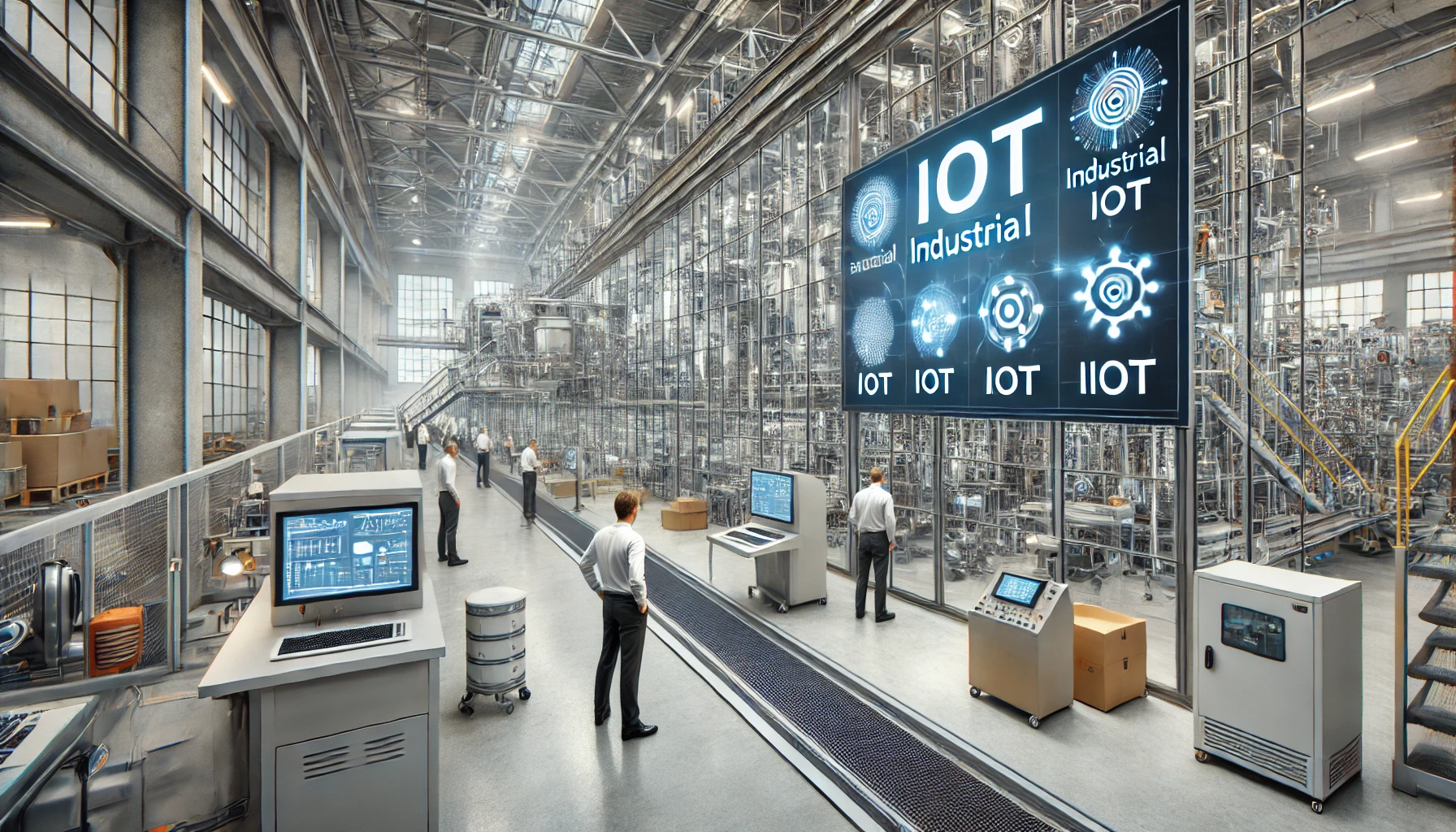
IIoT is transforming numerous industrial sectors, with applications ranging from operational optimization to the creation of new business models. Here are some significant examples:
In the manufacturing sector, IIoT enables real-time equipment monitoring, predictive maintenance that anticipates failures, advanced quality management systems, and integrated optimization of production and supply chain. Government initiatives like “Made in China 2025” and “Industrie 4.0” in Germany are actively promoting these technologies to increase industrial competitiveness.
In the energy and utilities sector, IIoT technologies enable more efficient energy management, remote monitoring of critical infrastructure like pipelines and distribution networks, proactive maintenance of plants, and the development of smart grids that are more resilient and flexible.
The aerospace and defense sector uses IIoT to monitor aircraft performance in real time, implement predictive maintenance strategies on critical systems, and optimize complex global supply chains.
The automotive industry is adopting IIoT to create highly automated smart factories, develop increasingly connected vehicles, and improve logistics efficiency, reducing time and cost.
Even traditionally less-digitized sectors are benefiting from IIoT. In agriculture, IoT sensors monitor soil and crop conditions, smart irrigation systems optimize water use, and digital livestock management solutions improve productivity.
In the healthcare sector, IIoT enables remote patient monitoring that improves the management of chronic diseases, advanced medical-equipment management systems, and tracking solutions to ensure the integrity of the pharmaceutical supply chain.
Finally, in the transportation and logistics sector, IIoT is revolutionizing asset tracking, route optimization, and advanced fleet management, creating supply chains that are more efficient, transparent, and resilient.
Adopting an IIoT System in Your Business
Implementing IIoT systems brings a series of potential benefits, but also significant challenges that companies need to consider carefully when planning strategically.
Advantages
Increased efficiency and productivity is perhaps the most immediate benefit of IIoT. Through intelligent automation, real-time monitoring, and algorithmic process optimization, companies can eliminate inefficiencies, reduce downtime, and maximize resource utilization.
Reduced operating costs come from multiple factors: predictive maintenance minimizes unplanned downtime and extends the useful life of equipment, while optimizing the use of resources (energy, materials, labor) reduces waste and associated costs.
Improved product quality is enabled by continuous monitoring and real-time analysis of process parameters. The ability to quickly identify and correct deviations from optimal parameters translates into more consistent production and higher-quality finished products.
Better-informed decision-making represents a significant strategic advantage. Access to real-time operational data and advanced analytics gives managers a clearer and more timely view of how the business is running, enabling faster decisions based on hard evidence rather than intuition or partial information.
Greater operational agility and flexibility lets companies adapt more quickly to changing demand, customize production, and respond effectively to new market opportunities or competitive threats.
Improved workplace safety comes from continuous monitoring of operating conditions and from automating dangerous activities. Smart sensors and systems can detect potentially risky situations before they turn into incidents, while automation reduces workers’ exposure to hazardous environments.
Supply chain optimization through end-to-end visibility and predictive capabilities improves synchronization between demand and supply, reduces inventory levels, and minimizes logistics delays.
Finally, the creation of new services and business models is perhaps the most transformative potential of IIoT. Companies can evolve from simple product suppliers into providers of integrated solutions and ongoing services based on collected data and analytical capabilities, creating more stable revenue streams and longer-lasting customer relationships.
Disadvantages
Despite the benefits, adopting IIoT also brings significant challenges.
High initial costs are a barrier to entry, particularly for small and medium-sized enterprises. Implementing IIoT systems requires considerable investment in hardware (sensors, gateways, network infrastructure), software (IoT platforms, analytics tools), integration services, and staff training. While these costs tend to come down as the technologies mature, the initial phase requires careful financial planning.
The complexity of integration with legacy systems is a significant technical and organizational challenge. Many industrial environments operate with machinery, control systems, and software installed decades ago that weren’t designed for modern connectivity. Connecting these heterogeneous systems to the IIoT ecosystem requires specialized skills and custom interface solutions.
Data management challenges arise from the very nature of IIoT: the capacity to generate enormous volumes of heterogeneous data at ever-increasing speeds. Storing, processing, and effectively analyzing this data requires robust infrastructure and sophisticated data management strategies that not every organization has.
Cybersecurity concerns are amplified in IIoT, where the compromise of systems can have consequences not only informational but also physical. The increase in network access points across thousands of connected devices expands the attack surface, while many IoT devices have limited ability to implement robust security measures. This vulnerability is aggravated by the lack of universally adopted security standards in the sector.
The need for qualified personnel is a significant bottleneck. IIoT requires a unique skill mix that spans traditionally separate domains: electronics engineering, computer science, data analysis, cybersecurity, and specific knowledge of the industrial sector in question. Finding professionals with this multi-disciplinary profile is difficult in the current labor market.
Interoperability issues emerge from the fragmented nature of the IIoT technology ecosystem, with different vendors offering solutions based on proprietary standards or divergent implementations of open standards. Making devices and systems from different manufacturers communicate effectively requires significant integration effort and may limit future flexibility in technology choices.
Connectivity reliability is a critical point, especially in industrial environments characterized by difficult electromagnetic conditions, metal structures, and complex layouts that can interfere with wireless signals. Dependence on stable connectivity can be an operational risk in the absence of adequate resilience strategies.
Finally, questions related to data privacy are taking on growing relevance, particularly in industrial contexts that also involve monitoring personnel activity. Data collection and analysis must comply with privacy regulations, which vary significantly across jurisdictions and are constantly evolving.
Despite these challenges, evidence suggests that a well-planned IIoT implementation, with a clear understanding of business objectives and a gradual approach to adoption, can generate significant returns on investment that more than justify the initial costs and difficulties.